
*If every payment you made was public by default, how would you feel?* That’s how many blockchains work: great for verification, not so great for personal privacy. In this explainer video, Bola breaks down privacy coins – what they hide, how they work, why regulators care, and whether “selective disclosure” can balance user privacy with accountability. Bola deep dives why privacy isn’t the same as anonymity, and how regulation (AML/KYC expectations on exchanges) shapes which coins get listed. She also contrasts Monero’s “privacy by default” with Zcash’s “privacy as a choice” (transparent vs. shielded), show how selective disclosure and viewing keys work, and explain zero‑knowledge proofs—validating transactions without revealing sensitive details. *In this video, you’ll learn:* ✅ Why public ledgers are verifiable but can expose address‑d patterns over time ✅ What privacy coins aim to hide (sender, receiver, amount, or the trail) ✅ Pseudonymity vs. anonymity: how Bitcoin’s transparency works in practice ✅ Monero vs. Zcash: privacy‑by‑default vs. privacy‑as‑a‑choice (transparent vs. shielded) ✅ Monero ($XMR) vs. Zcash ($ZEC): privacy by default vs. privacy as a choice (transparent vs. shielded) ✅ Selective disclosure: Zcash viewing keys for “privacy with proof” ✅ Zero‑knowledge proofs: validating transactions without revealing details ✅ AML expectations: why regulated exchanges face constraints and why some coins get delisted ✅ The balance ahead: confidentiality for users with pathways for lawful investigation *⏱️ Timestamps:* ⏳ 00:00 – Introduction: the transparency tradeoff of open ledgers and public payments ⏳ 00:36 – What are privacy coins? Pseudonymous vs. anonymous ⏳ 01:29 – What privacy coins aim to hide (four dimensions) ⏳ 01:40 – Why privacy ≠ wrongdoing; why regulators still draw lines ⏳ 02:14 – Anti-Money Laundering (AML) rules: Why AML restricts privacy coins ⏳ 03:16 – Monero (default privacy) vs. Zcash (opt‑in shielding) ⏳ 03:46 – Why selective disclosure? ⏳ 04:25 – Zero‑knowledge proofs in plain English (the age‑check analogy) ⏳ 05:06 – Finding balance: privacy by default with accountability when needed ⏳ 05:48 – Your take: selective disclosure or all‑or‑nothing privacy? #privacycoins #zcash #zec #monero #cryptoinvesting #binance #cryptoexplained #binanceexplains *⚠️ RISK WARNING:* Digital asset prices can be volatile. The value of your investment may go down or up and you may not get back the amount invested. You are solely responsible for your investment decisions and Binance is not liable for any losses you may incur. It is your responsibility to ascertain whether you are permitted to use the services of Binance based on your individual circumstances. Not financial advice. For more information, see our Terms of Use and Risk Warning. *📢 Join the conversation:* ➡️ Twitter/X: https://twitter.com/binance ➡️ Instagram: https://www.instagram.com/binance ➡️ Facebook: https://www.facebook.com/binance ➡️ TikTok: https://www.tiktok.com/@binance ➡️ LinkedIn: https://www.din.com/company/binance ➡️ Reddit: https://www.reddit.com/r/binance *🔗 Download Binance here (iOS, Android):* https://binance.onelink.me/y874/cb98de36 *🔗 Sign up for Binance here:* https://www.binance.com/en?ref=ERQKP7ND&utm_source=BinanceYoutube&utm_medium=GlobalSocial&utm_campaign=GlobalSocial
Privacy Coins, Explained in 6 Minutes
 1 month ago
 *If every payment you made was public by default, how would you feel?* That’s how many blockchains work: great for verification, not so great for personal privacy. In this explainer video, Bola breaks down privacy coins – what they hide, how they work, why regulators care, and whether “selective disclosure” can balance user privacy with accountability. Bola deep dives why privacy isn’t the same as anonymity, and how regulation (AML/KYC expectations on exchanges) shapes which coins get listed. She also contrasts Monero’s “privacy by default” with Zcash’s “privacy as a choice” (transparent vs. shielded), show how selective disclosure and viewing keys work, and explain zero‑knowledge proofs—validating transactions without revealing sensitive details. *In this video, you’ll learn:* ✅ Why public ledgers are verifiable but can expose address‑d patterns over time ✅ What privacy coins aim to hide (sender, receiver, amount, or the trail) ✅ Pseudonymity vs. anonymity: how Bitcoin’s transparency works in practice ✅ Monero vs. Zcash: privacy‑by‑default vs. privacy‑as‑a‑choice (transparent vs. shielded) ✅ Monero ($XMR) vs. Zcash ($ZEC): privacy by default vs. privacy as a choice (transparent vs. shielded) ✅ Selective disclosure: Zcash viewing keys for “privacy with proof” ✅ Zero‑knowledge proofs: validating transactions without revealing details ✅ AML expectations: why regulated exchanges face constraints and why some coins get delisted ✅ The balance ahead: confidentiality for users with pathways for lawful investigation *⏱️ Timestamps:* ⏳ 00:00 – Introduction: the transparency tradeoff of open ledgers and public payments ⏳ 00:36 – What are privacy coins? Pseudonymous vs. anonymous ⏳ 01:29 – What privacy coins aim to hide (four dimensions) ⏳ 01:40 – Why privacy ≠ wrongdoing; why regulators still draw lines ⏳ 02:14 – Anti-Money Laundering (AML) rules: Why AML restricts privacy coins ⏳ 03:16 – Monero (default privacy) vs. Zcash (opt‑in shielding) ⏳ 03:46 – Why selective disclosure? ⏳ 04:25 – Zero‑knowledge proofs in plain English (the age‑check analogy) ⏳ 05:06 – Finding balance: privacy by default with accountability when needed ⏳ 05:48 – Your take: selective disclosure or all‑or‑nothing privacy? #privacycoins #zcash #zec #monero #cryptoinvesting #binance #cryptoexplained #binanceexplains *⚠️ RISK WARNING:* Digital asset prices can be volatile. The value of your investment may go down or up and you may not get back the amount invested. You are solely responsible for your investment decisions and Binance is not liable for any losses you may incur. It is your responsibility to ascertain whether you are permitted to use the services of Binance based on your individual circumstances. Not financial advice. For more information, see our Terms of Use and Risk Warning. *📢 Join the conversation:* ➡️ Twitter/X: https://twitter.com/binance ➡️ Instagram: https://www.instagram.com/binance ➡️ Facebook: https://www.facebook.com/binance ➡️ TikTok: https://www.tiktok.com/@binance ➡️ LinkedIn: https://www.din.com/company/binance ➡️ Reddit: https://www.reddit.com/r/binance *🔗 Download Binance here (iOS, Android):* https://binance.onelink.me/y874/cb98de36 *🔗 Sign up for Binance here:* https://www.binance.com/en?ref=ERQKP7ND&utm_source=BinanceYoutube&utm_medium=GlobalSocial&utm_campaign=GlobalSocial
Related

Tether USDT Just Surpassed Ethereum🚨
1 hour ago
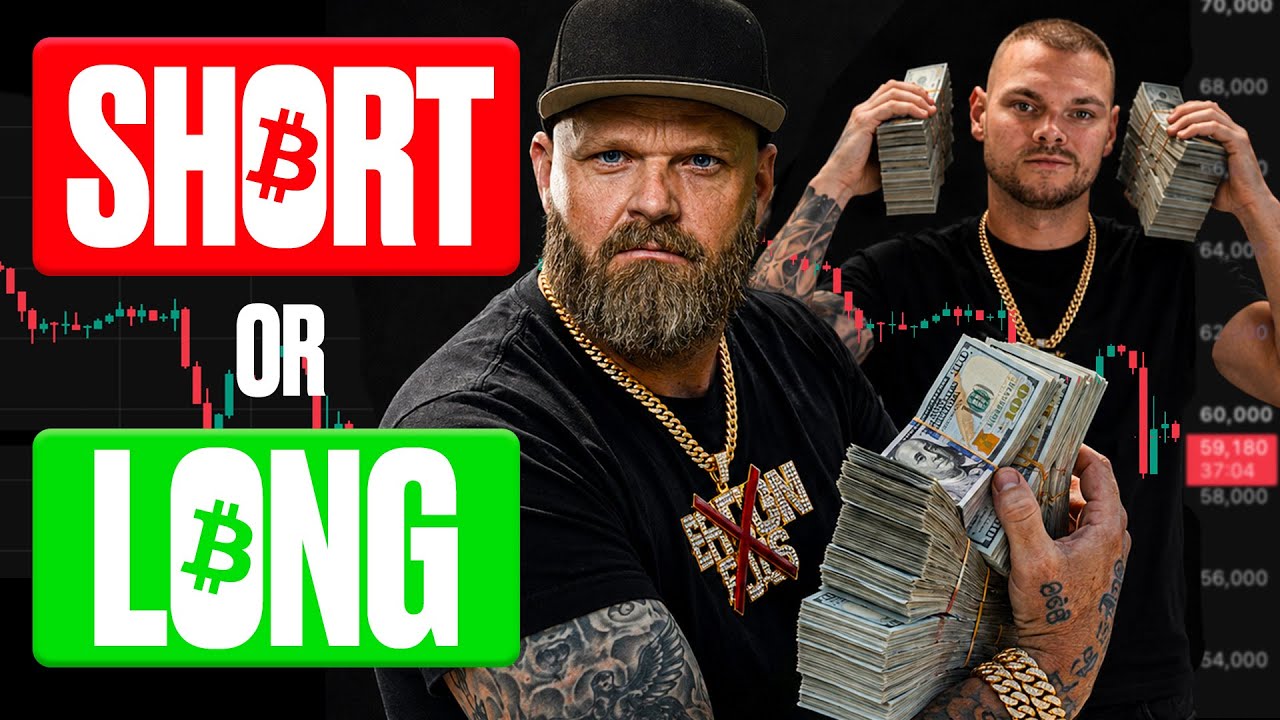

WARNING: BITCOIN ETF CAPITULATION
2 hours ago


The Trap Is Closing On Bitcoin....
3 hours ago
Bears Running out of Steam!? Naughty Bitcoin!
4 hours ago
BITCOIN: GAME OVER!!!!!!!
4 hours ago
Popular

Micron Explodes Is Still a Buy?
18 hours ago


Why AI loops glitch — and how to fix them
16 hours ago
Stocks Nancy Pelosi Just Bought 📈
18 hours ago

BITCOIN COLLAPSING NOW !!!
18 hours ago