Standard Chartered’s Chainlink price forecast: $200 by 2030, a 25x leap
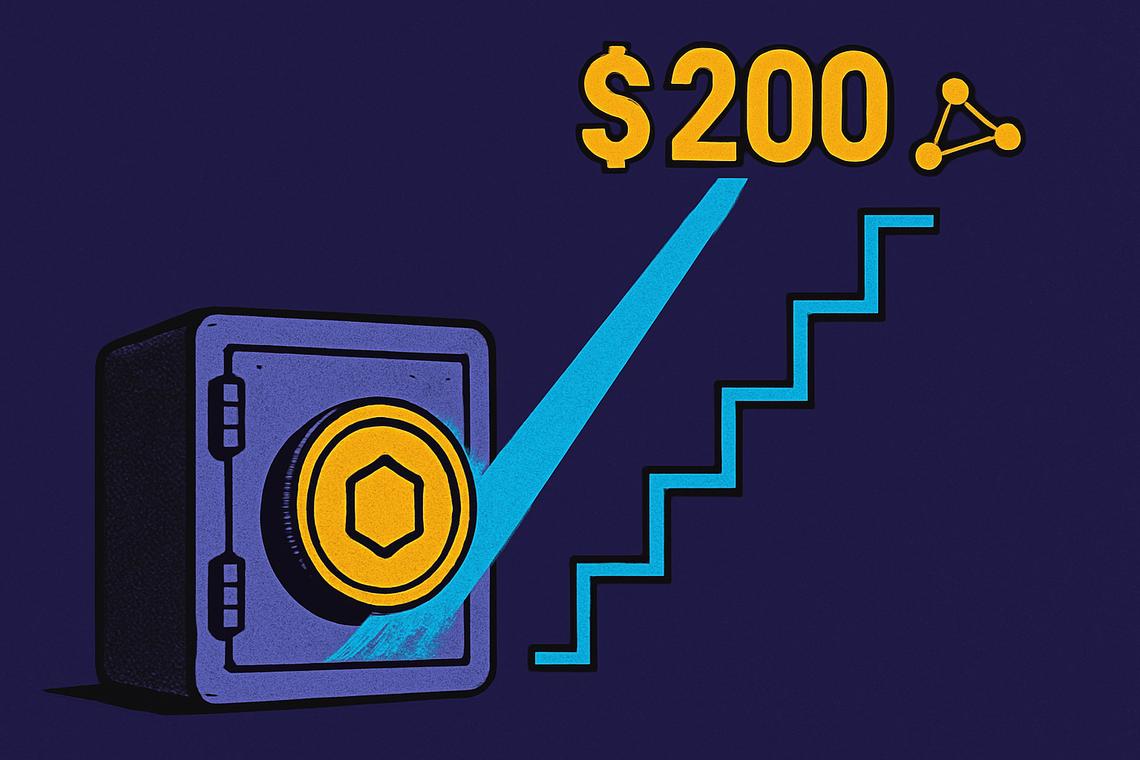
Standard Chartered has put a number on how far it thinks Chainlink can climb, and the figure is striking enough to turn heads across crypto markets: a $200 price target for LINK by the end of 2030, roughly 25 times its price near $8 at the time the bank published its coverage. The call, led by Geoff Kendrick, the bank’s Global Head of Digital Assets Research, ties Chainlink’s fortunes directly to the growth of tokenized finance and decentralized lending, arguing that as more real-world assets and DeFi activity move on-chain, demand for Chainlink’s data and interoperability services should climb with them. This Chainlink price forecast marks one of the more detailed institutional valuations yet published for an oracle network.
Key takeaways
- Standard Chartered set a $200 LINK price target for the end of 2030, about 25 times its price near $8 at the time of the report.
- LINK is projected to reach $13 by the end of 2026, then climb through $41, $82 and $133 before hitting $200 in 2030.
- Chainlink secures more than $110 billion in value, representing roughly 70% of oracle-dependent DeFi value globally.
- CCIP quarterly volume hit $4.9 billion in the second quarter, up 353% year-over-year.
- Standard Chartered expects tokenized assets on blockchains to grow from $340 billion to $4 trillion by 2028, and DeFi deployed assets to increase 37-fold to $2.7 trillion by 2030.
Standard Chartered’s Chainlink Price Forecast to 2030
Standard Chartered’s Chainlink price forecast is built in stages rather than a single leap, with LINK expected to climb gradually as tokenization and DeFi adoption scale up over the coming years. Kendrick’s model links LINK’s valuation to projected growth in Chainlink’s fee revenue, which the bank estimates could increase about 25 times by 2030 as tokenized assets and decentralized finance expand. The token According to CoinGecko data, the asset was valued at $8.25 during the report period, representing a 0.8% decline compared to the preceding 24-hour interval.
… Continue reading the full article at the original source below.