
Boltz’s shutdown shows the real danger of AI hacking is pushing crypto back into the hands of giant custodians
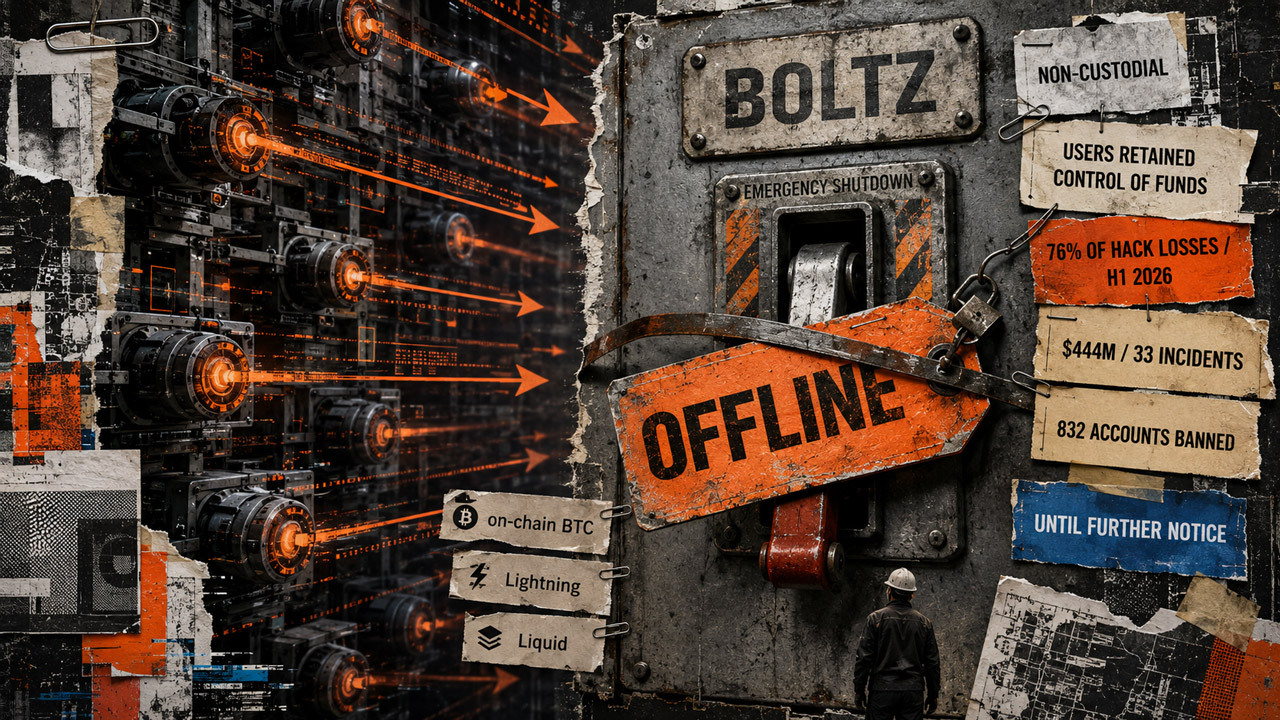
In an Aug. 3 post, Bitcoin bridge Boltz said automated, AI-assisted probing led to several contained exploits before the attack accelerated sharply. Boltz's non-custodial design kept every user's funds safe through months of attacks. Yet the Bitcoin swap service shut down anyway.
Boltz said its team could no longer keep pace, so swaps will remain offline until further notice.
Before the shutdown, Boltz bridged Bitcoin's layers by switching between on-chain BTC, the Lightning Network, and Liquid. Its non-custodial structure meant users retained control of their coins throughout each swap, with a built-in refund path if anything went wrong before settlement.
That structure protected user balances, but keeping the business running was a separate problem. Boltz absorbed the losses from exploits on its own books, then decided the swap product could no longer operate safely.
| Layer | What held up | What broke down |
|---|---|---|
| User custody | Users retained control of funds | Swap service still had to shut down |
| Refund path | Refunds remained available | Normal swap flow stayed disabled |
| Protocol design | Non-custodial structure limited user-fund risk | Exploit losses still hit Boltz directly |
| Business operation | Support and API refunds continued | Product availability became unsustainable |
| Security response | Exploits were contained | Attack pace exceeded team capacity |
A game of cat and mouse
AI's real advantage goes to whoever can automate the entire defensive chain. That chain involves confirming a finding, assessing its severity, building and testing a fix, and shipping it without breaking anything else. Defenders must then watch for the next move.
… Continue reading the full article at the original source below.