Ethereum and Solana are hosting trillions in dollar volume, yet their native tokens risk losing direct consumer demand
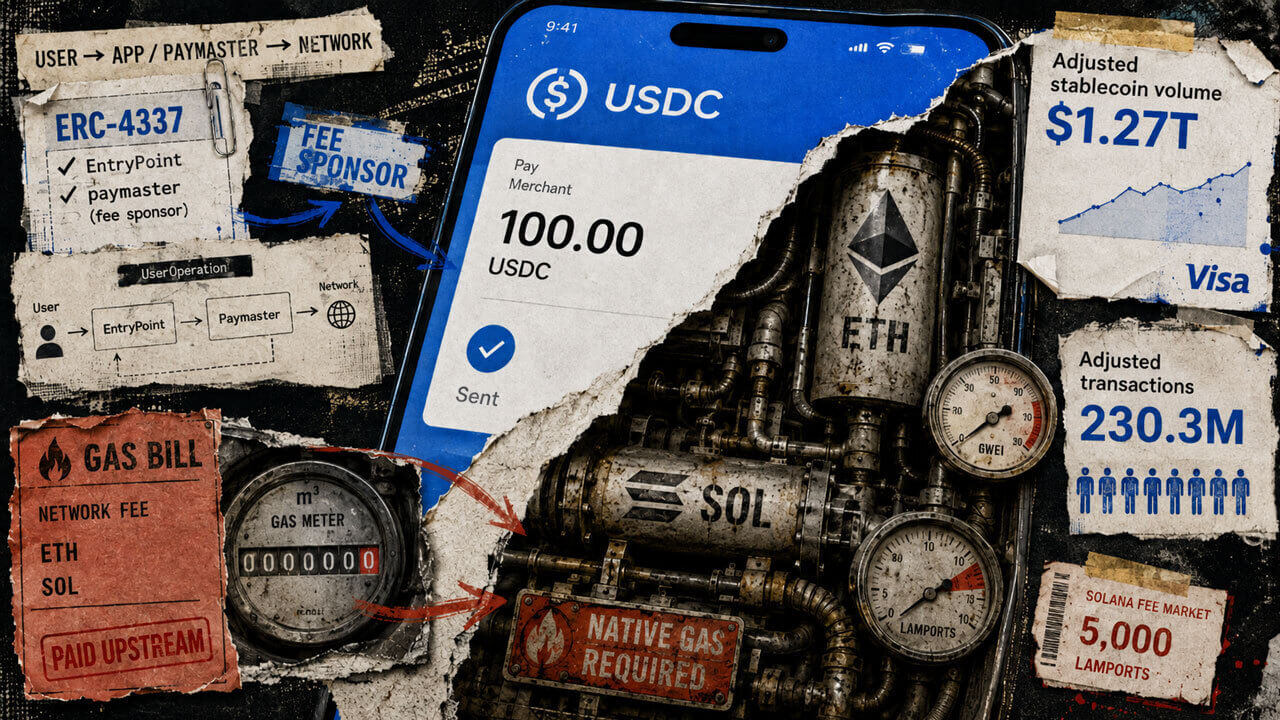
Matt Corallo followed up on an earlier post on Aug. 25, addressing what stablecoin users increasingly see: apps routing around ETH, SOL, and other non-stablecoin tokens.
A wallet can let someone receive and send USDC without displaying a native-token balance. Behind that interface, an app, paymaster, sponsor, or infrastructure provider still settles the network fee in the asset the chain accepts.
The native-token demand debate turns on who funds execution, manages the fee balance, and absorbs volatility after the user-facing requirement disappears.
The scale of the stablecoin rail makes that question more than a user-experience footnote. Visa's Onchain Analytics dashboard showed about $1.3 trillion in adjusted stablecoin volume and 230.3 million adjusted transactions over the 30 days viewed on Aug. 27.
Before adjustment, the same window contained about $6.8 trillion and 1.75 billion transactions.
Visa and Allium's adjusted methodology uses probabilistic labels for more than 3 million addresses, counts only the largest stablecoin transfer within a single transaction, and filters unlabeled addresses that exceed 1,000 transactions or $10 million in rolling 30-day volume.
… Continue reading the full article at the original source below.