
Bitcoin Fork: What Happens to Your Coins When the Chain Splits
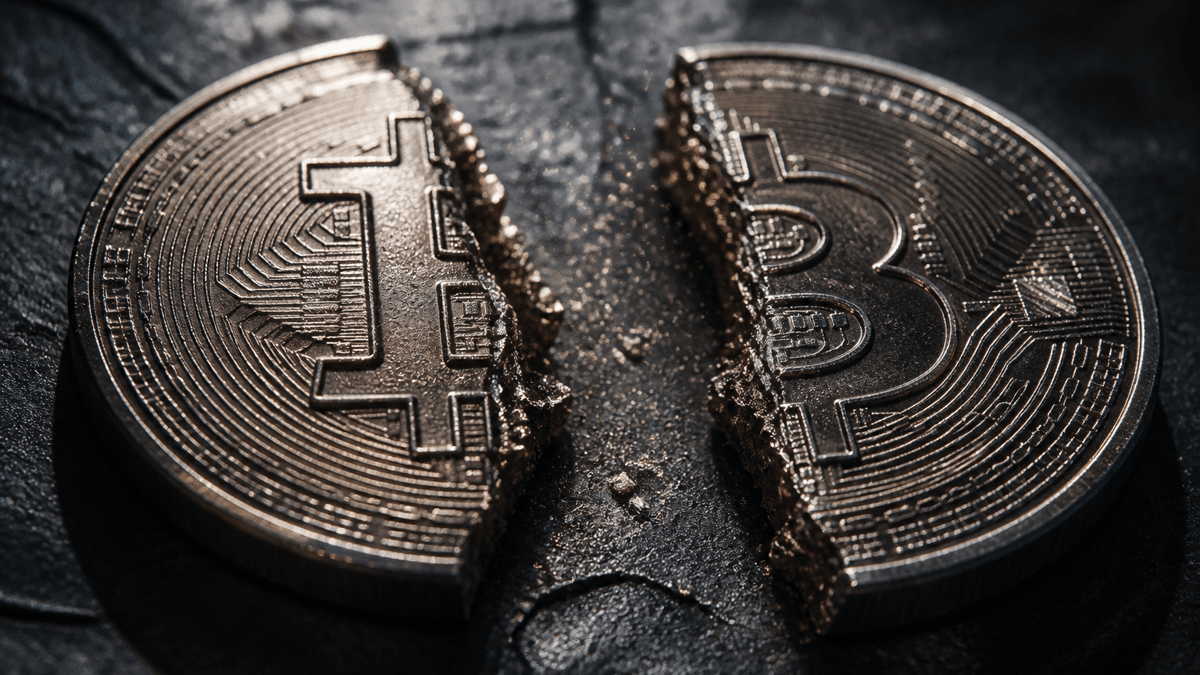
When a blockchain splits, your bitcoin does not disappear. After the split you hold it on both chains at once, because both chains share the same history up to the point of separation. One balance becomes two. Whether you actually receive the second balance, and whether you can move it safely, comes down to two questions: who holds the private keys, and is there any protection against transactions that are valid twice over. This article answers both, explains the terms involved and works through the German tax position.
The occasion is concrete. A permanent split from the Bitcoin blockchain is scheduled for October 31, 2026, carrying the name eCash and the ticker ECX. It concerns everyone who holds bitcoin, whether or not they have ever heard of the project. Before turning to this particular case, the principle behind it is worth setting out, because it repeats at every chain split.
What is a Bitcoin fork, and why do your coins sit on two chains afterwards?
A fork is a change to the rules by which a network accepts valid blocks. That is the one-sentence definition, and it already explains the consequence: where participants disagree about the new rules, they continue the chain differently from a given block onwards. From that point two blockchains exist, identical block for block up to the split.
… Continue reading the full article at the original source below.