
Bitcoin’s security risk starts when one block gets far more fees than the next
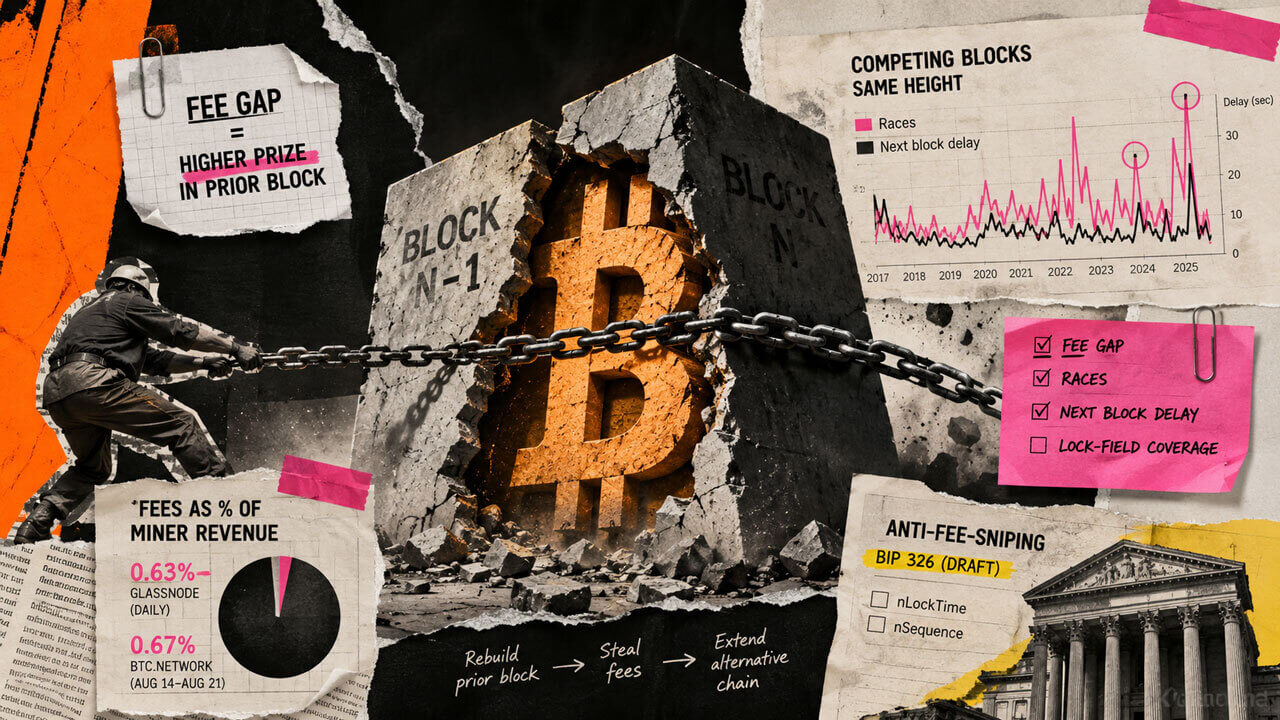
Bitcoin’s security-budget debate usually starts with one total: how much miners collect in transaction fees as the block subsidy shrinks.
A July 2026 NBER working paper by Fabian Schär, Dario Thürkauf, and David Yermack points to a second variable. Using data from 2017 through 2025, the authors report that larger fee differences between adjacent Bitcoin blocks are associated with more competing blocks at the same height and a longer wait for the next block.
The evidence is observational and identifies a network-level relationship, while miner intent and the cause of any individual block race remain unresolved. The finding still gives wallets, miners, and users a measurable signal: Bitcoin security incentives respond to how fees arrive from block to block, as well as how much the network pays over time.
Fee gaps create a different mining incentive
Bitcoin currently pays miners a fixed subsidy of 3.125 BTC for each block, plus the transaction fees included in that block. Successive subsidy reductions place more long-run weight on fees as a source of mining revenue.
… Continue reading the full article at the original source below.