
Singapore’s biological data center runs on neurons using 20x less power than GPUs
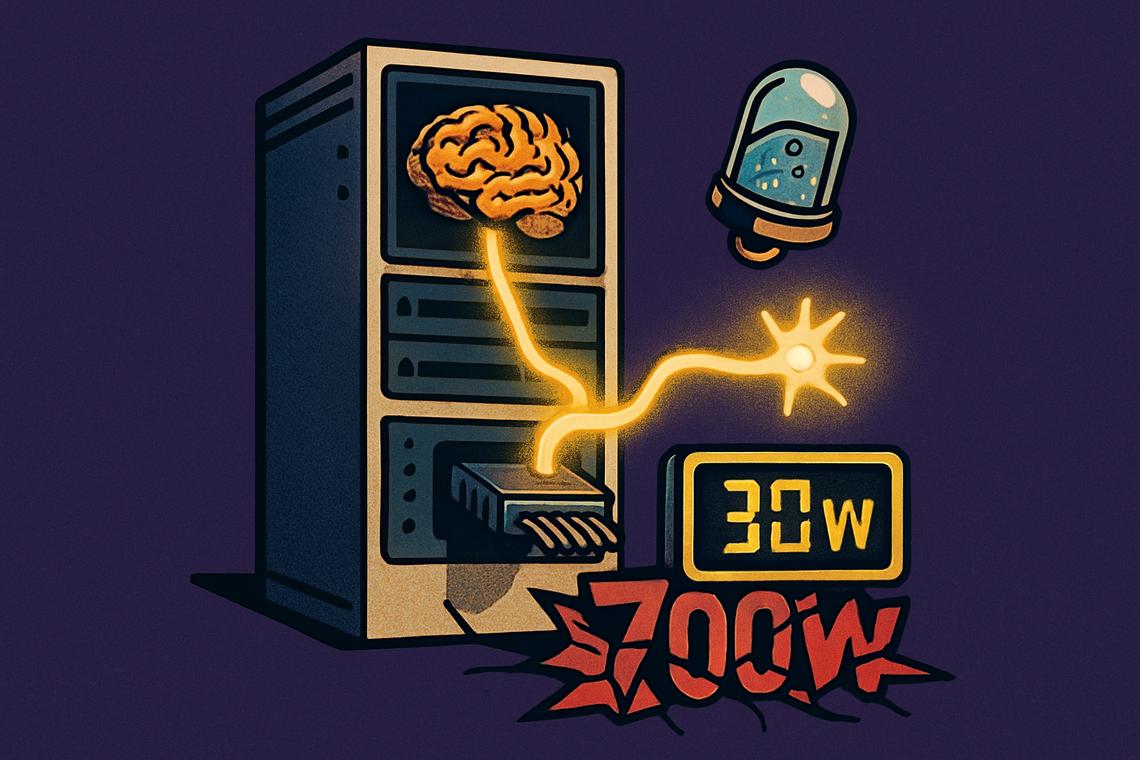
A data center in Singapore has started running on human brain cells, and it isn’t a plot twist from a science fiction script. At the National University of Singapore‘s Life Sciences Institute, a working biological data center quietly went live on July 16, using lab-grown human neurons instead of conventional silicon chips to process information. The system was publicly unveiled on August 6, and researchers say it points toward a genuinely different way of thinking about power-hungry AI infrastructure.
Key takeaways
- The National University of Singapore launched what its partners describe as the world’s first independently operated biologically integrated server rack.
- The system runs on 20 biological computing units containing lab-grown human cortical neurons paired with silicon microelectrode arrays.
- Each unit uses about 30 watts, compared with roughly 700 watts for a high-end Nvidia H100 GPU under full load.
- The neurons must be fed every three days and typically last around six months before needing replacement.
- DayOne, the data center operator involved in the project, is reportedly weighing a scale-up from 20 to as many as 1,000 units.
Singapore unveils world’s first biological data center
The project is the result of a collaboration between NUS Medicine’s Yong Loo Lin School of Medicine, Melbourne-based biotech startup Cortical Labs, and Singapore-based data center operator DayOne. Together, they built what they call the first independently operated server rack powered by biologically integrated computing hardware, moving the concept out of the lab bench and into something closer to real infrastructure.
… Continue reading the full article at the original source below.